
How Bench Warrants Work in Brown County
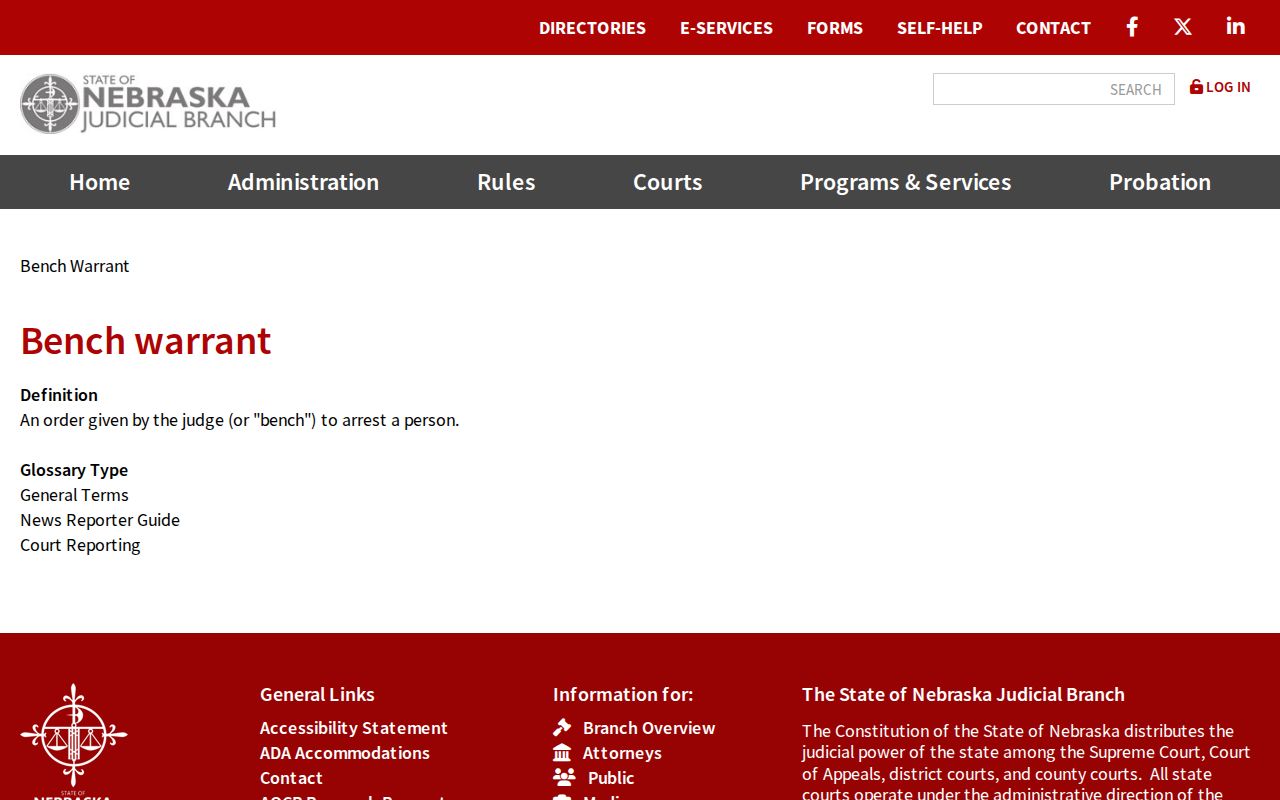
Nebraska's Judicial Branch calls a bench warrant an arrest order issued by the judge, the "bench" itself. Miss a court date, and one may follow. State misdemeanor guidance says the same about missed payments. In Brown County, a bench or FTA warrant can grow from a missed arraignment, hearing, trial, or review date, and contempt orders or broken release terms count too. A bench warrant is not a new criminal charge. Brown County Court handles the county-court side, and Brown District Court takes district and family matters. Ask the clerk which obligation triggered the Brown County warrant and what step the court will accept now.
Brown County FTA Timing
Nebraska's own guidance says a warrant can issue the day of a missed appearance, or the day after a payment deadline passes. Notice may lag by a day or two. That timing is statewide, though. It says nothing about a particular Brown County case. So call the clerk after a missed date rather than waiting on a web result.
- Find the case number and the court named on the notice.
- Search JUSTICE, selecting Brown County and the likely court type.
- Call the clerk and ask whether the docket shows an FTA, warrant, bond, or reset.
- Ask the sheriff whether it has a service or custody entry and what to do before appearing.
- Keep any recall, quash, payment-plan, bond, or new-setting order.
The Nebraska misdemeanor guidance supplies the statewide rule, not a Brown-specific walk-in schedule.
Bench Warrant Issuance in Brown County
The court creates the process, not the sheriff. A docket entry may show the case, the trigger, the judge, and the date, along with the arrest command, the destination jail, and any bond instruction. Nebraska law lets county and district judges issue criminal process, with limited authority for clerk-magistrates. Start with the issuing venue.
| Trigger | Missed appearance, unpaid fine or cost, contempt, release breach, or another court-directed failure. |
|---|---|
| Court and case | Brown County Court or Brown District Court, plus the case number. |
| Command | Sheriff, city marshal, police officer, or another authorized officer named in the process. |
| Return path | Bring the person before the issuing court or a proper magistrate. |
What Brown's Bench Forms Show
Nebraska's public forms teach you how a bench warrant record is built, not whose data to fill in. The child-support form DC 6:5.26 shows the county, case number, parties, contempt order, jail, and the judge's signature, while the family form, DC 6:5.33, carries party facts, the arrest command, and identifying fields. Neither sets a Brown County bond amount. Neither maps the local motion process. The Nebraska Judicial Branch defines the term itself.
A blank form helps you learn the labels. Never copy names, addresses, birth dates, or physical descriptors from a live Brown County record.
How Bench and Arrest Warrants Differ
Both papers can put a person in custody. The difference is the trigger. A bench warrant follows a court obligation or order, while an arrest warrant follows an accusation and a probable-cause process, and Brown County Court and Brown District Court each issue process within their own roles.
| Question | Bench warrant | Arrest warrant |
|---|---|---|
| Typical trigger | Missed appearance, payment, contempt, or release term. | Complaint, accusation, and probable-cause process. |
| Primary record | Docket entry, order, or contempt form. | Warrant, complaint, affidavit, and docket. |
| First confirmation | Issuing clerk, then sheriff for service. | Issuing clerk, then sheriff or directed officer. |
| Resolution | Reset, recall, quash, payment, bond, or appearance as ordered. | Appearance, bond, counsel, and court action as ordered. |
Brown County Court and District Court Routes
Traffic, misdemeanor, ordinance, and preliminary-felony matters start at Brown County Court, 148 West 4th Street in Ainsworth. The number is 402-387-2864. Court Clerk Roxanne Philben is the named contact, with weekday hours of 8:00 a.m. to 4:30 p.m. Felony, district, child-support, and family contempt cases go to Brown District Court at the same address, 402-387-2705. Clerk Travis Hobbs takes those calls. The sheriff sits at 142 West 4th Street, 402-387-1440. Two addresses, two jobs. The court holds the judicial record; the sheriff handles service and custody. The state's official child-support bench-warrant page publishes the public form.
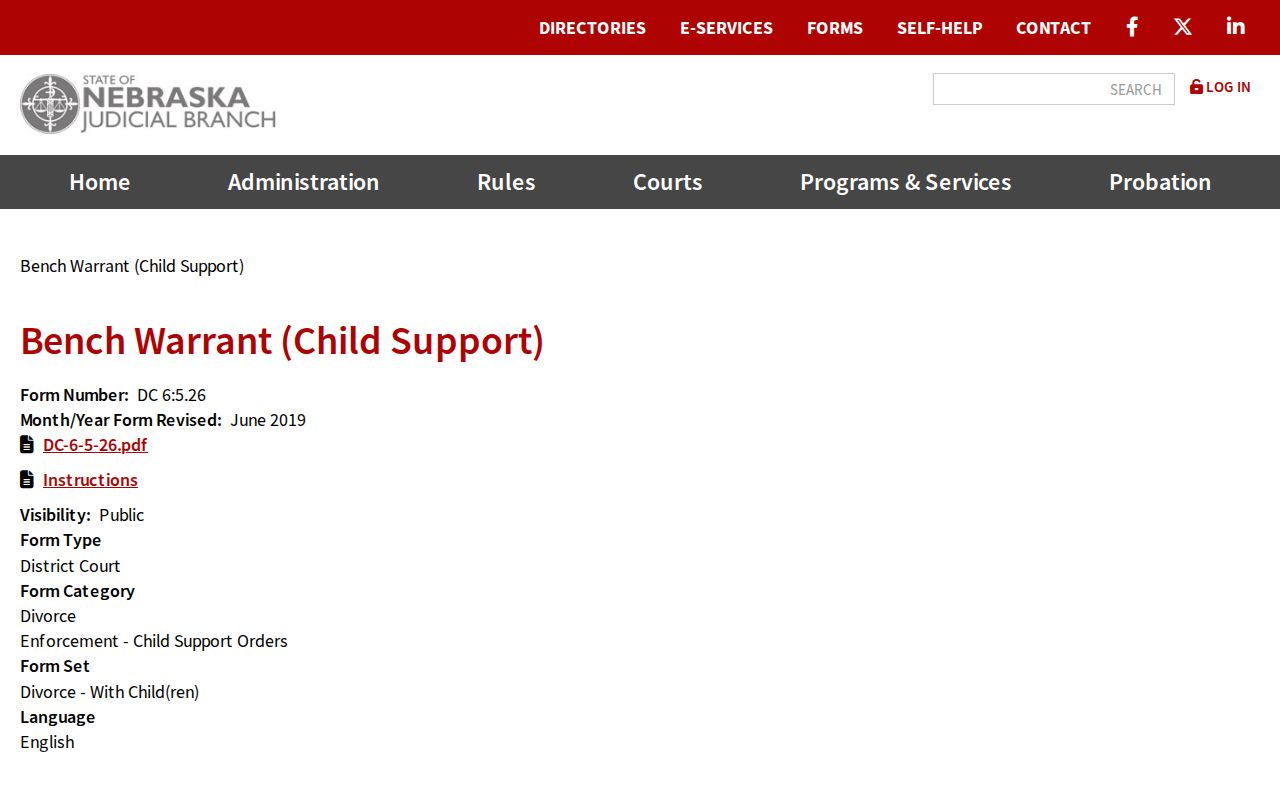
The form page is a statewide process source, not a Brown-specific person record.
Clearing a Bench Warrant in Brown County
Call the clerk before you walk in. Brown County publishes no standard surrender appointment, recall motion, bond window, local fee, or accepted-payment list. There is no posted safe-walk-through process either. Ask whether your case needs a new setting, a payment, a motion, a contempt hearing, surrender, bond, or counsel, and ask the sheriff where the service side gets handled.
Before travel: Confirm the court, case number, appearance instruction, payment method, and whether a judge must enter a recall or quash order.
Keep the order, receipt, or docket entry. In Brown County, a payment can settle an amount without changing the warrant until the court acts on it.
What Recall and Quash Mean
Recall means the issuing court pulls the warrant back. Quash means the court sets it aside. A reset appearance can fix the immediate problem while other case duties stay in force, and "cleared" is plain talk, not a published Brown County status code. Ask which order caused the change and when the sheriff's record will catch up.
- Recall
- The issuing court withdraws the process.
- Quash
- The court sets aside the process.
- FTA
- Failure to appear when ordered.
- Bond
- A release condition that secures a future appearance.
Never file a generic form in the wrong venue. Brown County procedure should come from the case clerk or your counsel.
Brown County Courts That Issue Bench Warrants
Brown County runs one county court and one district court inside Nebraska Judicial District 8. County Court covers the ordinance, misdemeanor, and traffic side. It also runs preliminary hearings and bail. District Court takes felonies after bind-over, along with district and family matters. Judge Mark D. Kozisek and Clerk Travis Hobbs are named on the District Court page. The County Court page names Clerk Roxanne Philben. Search JUSTICE by court type, not just by county. A warrant can still slip through a simple search because of lag, spelling, court level, or restricted access.
Bench Records and Access Limits
A Brown County case file can hold a register of actions plus document images, though some material stays closed. Juvenile, sealed, and investigative records fall in that group. So does a search warrant that has not yet been executed. A public-record request under Nebraska's Public Records Act works best when it names the office, the date, the case number, and the record you want. If a request is denied, ask for the statutory basis and for any redacted parts that could still be released. The point of access is to understand and resolve a case, not to republish the private identifiers printed on a warrant form.